Exploring Rhythm
Projects and Research Points
Project 1: Percussion Solo
The task of the first project is to compose four short contrasting pieces for untuned percussion instruments of own choice.
1. Snare Drum
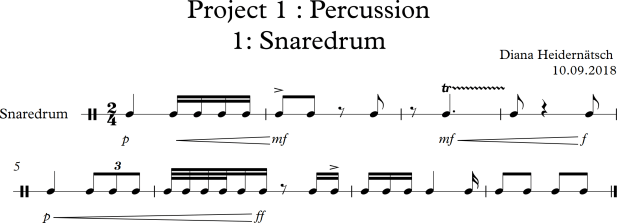
I myself find it difficult sometimes to start with projects, but in this exceptional case, it was easy for me to begin with the first piece due to some notes I made before I transferred it to Sibelius where I developed the sample further.
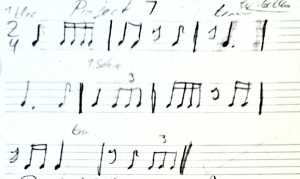
For the reason that it is my first composition with a correlation to my studies I wanted the piece to be rather easy structured. In terms for my choice for the instrument I was initially thinking about an eastern percussion instrument but changed it for a more common instrument (the snare drum) due to the more western sounding arrangement.
2. Dumbek
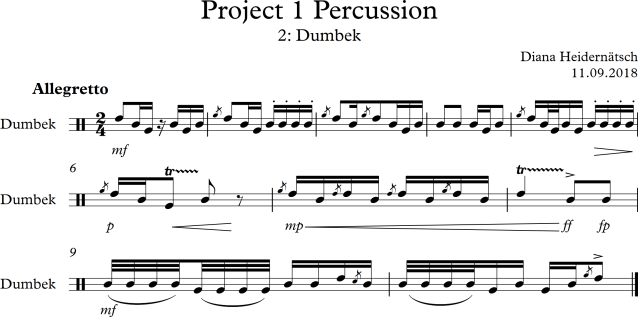
For the second piece I came back to my initial idea of writing something eastern related. I began with doing some research for typical eastern sounding untuned percussion instruments and came across an instrument called Darbuka or Goblet Drum.1
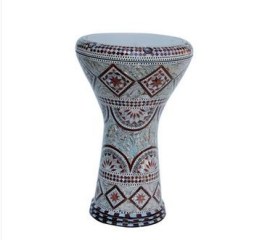
I informed myself about the instrument, studying its sounds and how one plays it. Doing this, I discovered that it can make three different sounds: The first sound, called “doum” is a low bass sound, produced by touching the head of the instrument with the fingers and palm. The second tone is known as “tek” and is created by beating close to the edge of the head. The last sound is called “pa” which involves a resting rapidly (content from Wikipedia, 2018) hand placed on the head to keep the tone closed.2
As I found it very helpful to start with some hand-written notes for the first composition and made some annotations in advance for this piece as well.
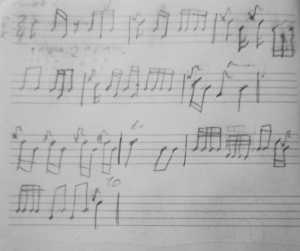
Furthermore, I learned that most of the easiest eastern-traditional rhythms are written in a 2/4 rhythm. Therfore I went for the same one with my own piece.3
References:
1 Content from Wikipedia. (2018). Goblet Drum. (online) Available at : https://en.wikipedia.org/wiki/Goblet_drum
2 Content from Wikipedia. (2018). Goblet Drum. (online) Available at: https://www.revolvy.com/page/Goblet-drum
3 Content from Wikipedia. (2018). Goblet Drum. (online) Available at: https://www.revolvy.com/page/Dumbek-rhythms
4 Alibaba. (2018). Arabic Egyptian Drum Darbuka. (online) Available at: https://www.google.co.uk/search?q=darbuka&source=lnms&tbm=isch&sa=X&ved=0ahUKEwiZ7uOX9bPdAhXIasAKHcNFA-IQ_AUIDCgD&biw=1536&bih=748#imgrc=5vk8MGLFHj6nMM:
3. Cajon
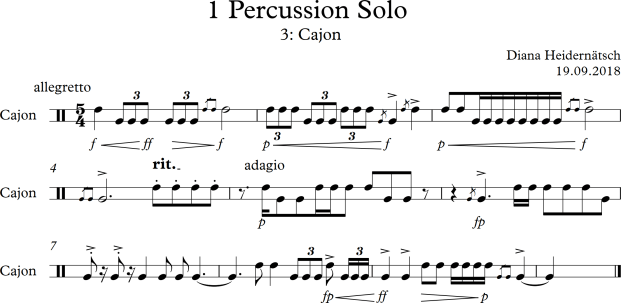
For my third piece I took ideas that suited my personal preerences. Due to my predilection for jazz I decided to write the piece in an rather unusual 5/4 time signature. My choice for the instrument was a bit harder this time. I firstly had a look online wheter I could find one or more percussion instruments, that were particulary often used in jazz. After a while of researching I decided to use a Cajon, which is an instrument that some of my classmates or even I myself sometimes used for several group projects in my former music-orientated school.
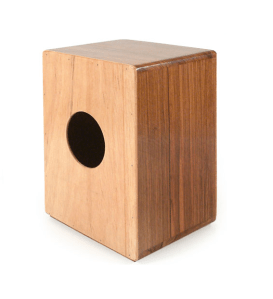
The instrument itself originated from the time when men and women where still traded as slaves. Especially, when people were transported on ships, some of them started to use boxes for transported goods as drums to pass the time. From there the Cajon wandered over the rest of the world. Nevertheless, it only was recognised as an important rhythm-instrument around the 1970s, which was particularry often heard in the spanish flamenco-music.1
A Cajon can produce two different sounds: A so called „bass-sound“, which, not surprisingly, sounds low and bassy. One can generate it through hitting the middle field of he instrument with the palm. And the “Slap-Sound” which is generated by hitting the corner of the instrument with the fingertips.2
References
1 Bührle, S. (2017) Cajon Hintergrundwissen-das solltest Du wissen! (online) Available at: https://www.cajonkaufen.com/cajon-hintergrundwissen/
2 Kühl, J. (2018) Ratgeber Cajon (online) Available at: https://www.kirstein.de/Cajon-Ratgeber/
3) essaness.com (2018) Cajon, 4 snare wire (onine) Available at: https://www.google.co.uk/searchq=cajon&source=lnms&tbm=isch&sa=X&ved=0ahUKEwjEwffw9s7dAhUJBMAKHcWYAaEQ_AUICigB&biw=1536&bih=699#imgrc=IwhVQ7GpU7SVVM:
4. Bongos
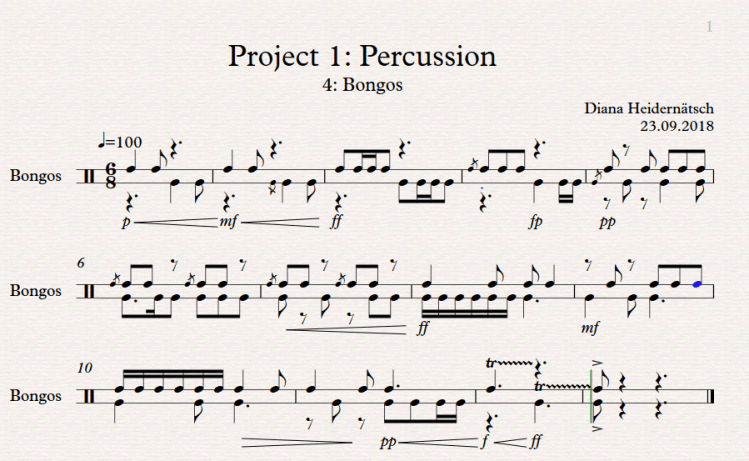
The procedure for writing this piece varies a bit from the ones before. In this case I haven’t made any sketches beforehand nor have I informed myself about the instrument. Seeing that I have some Bongos at home myself I briefly know how they are played (I still did some research afterwards). Due do the fact that I started writing the piece with Sibelius and not in my notebook I was finished within one or two hours, which is a bit less time than it usually takes me to write one piece, but I therefore had to make more brakes to get some new ideas.
The Bongo is well known a two headed drum, which has its origin in Cuba. The Spanish name for the larger head of the drum is “hembra”, which can be translated to “female”, whilst the smaller one is called “macho”, which means “male”. It first came up at around 1900 and was mainly used for the Latin American Dance.1,2
References:
1 Lotha, G. (2016) Bongo drums (online) Available at: https://www.britannica.com/art/bongo-drum
2 Content from Wikipedia. (2018) Bongo Drum (online) Available at: https://en.wikipedia.org/wiki/Bongo_drum
Project 2: Duets
The given task for the second project is to compose four short pieces for two unpitched percussion instruments.
The first two pieces should create a conversation or discussion between the two instruments whilst the third and fourth piece should be written in more unusual time signatures. (5 and 7 beats to the bar)
1) Snare Drum & Hand Drum
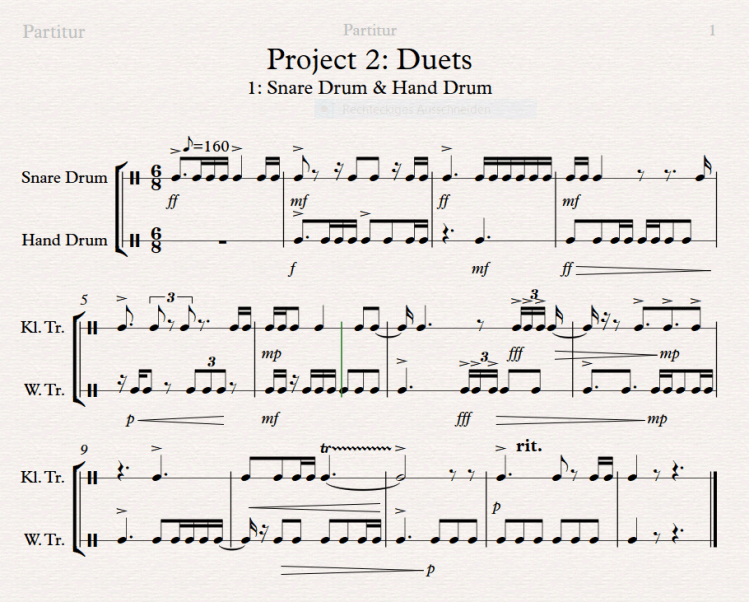
The task for the first two pieces of the second project, was to create a conversation or discussion between two instruments. I generally would describe this piece as an argument between the two instruments, that ends with compromise.
The snare drum starts with a small motive, which only lasts for one bar and is being repeated in a slightly different way by the hand drum in the second bar. Up until bar 7 both of the instruments try to arrange themselves with one another by coming up repetitively with a dotted crotchet note. Alternately, they are getting louder and quieter until in bar 7 both of them reach their loudest point. From then until the end the instruments are only getting quieter until the end. One can also find a “ritardando” above the second last bar, which indicates, that the end of the “argument” has been reached and the two instruments are “calming down” again.
2) Agogos & Castanets
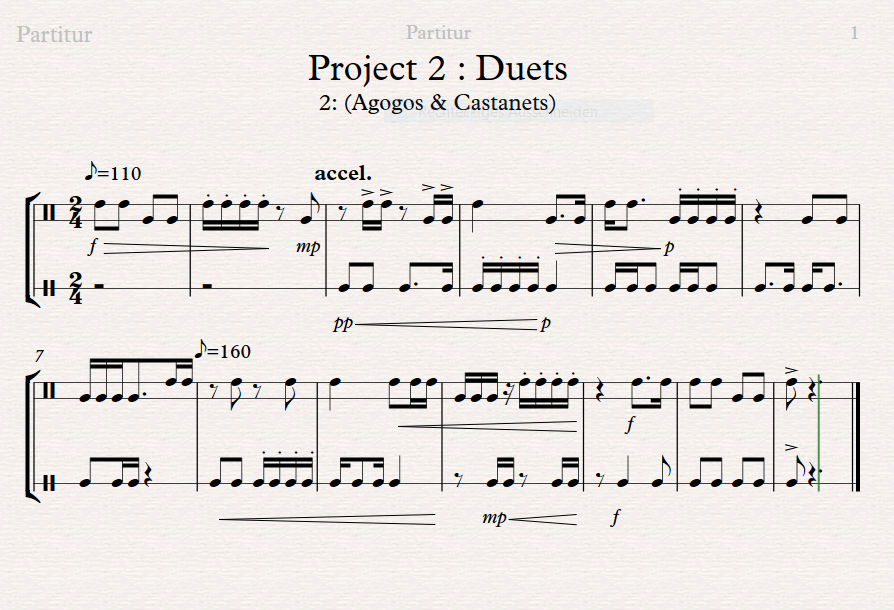
The second piece is more of a friendly conversation between agogos and castanets. One could say that the agogos are trying to “wake” the castanets.
The motive the agogos start with consists of four quavers followed by four semiquavers. It can be heard from both of the instruments in varied versions throughout the whole piece. The piece begins rather slowly but constantly becomes faster from bars 3-8. Whilst the agogos start in forte and become quieter in the middle of the piece, the castanets (which started with a pianissimo) are constantly becoming louder. They both end with the first four notes played equally loud.
3) Wood block & Shaker
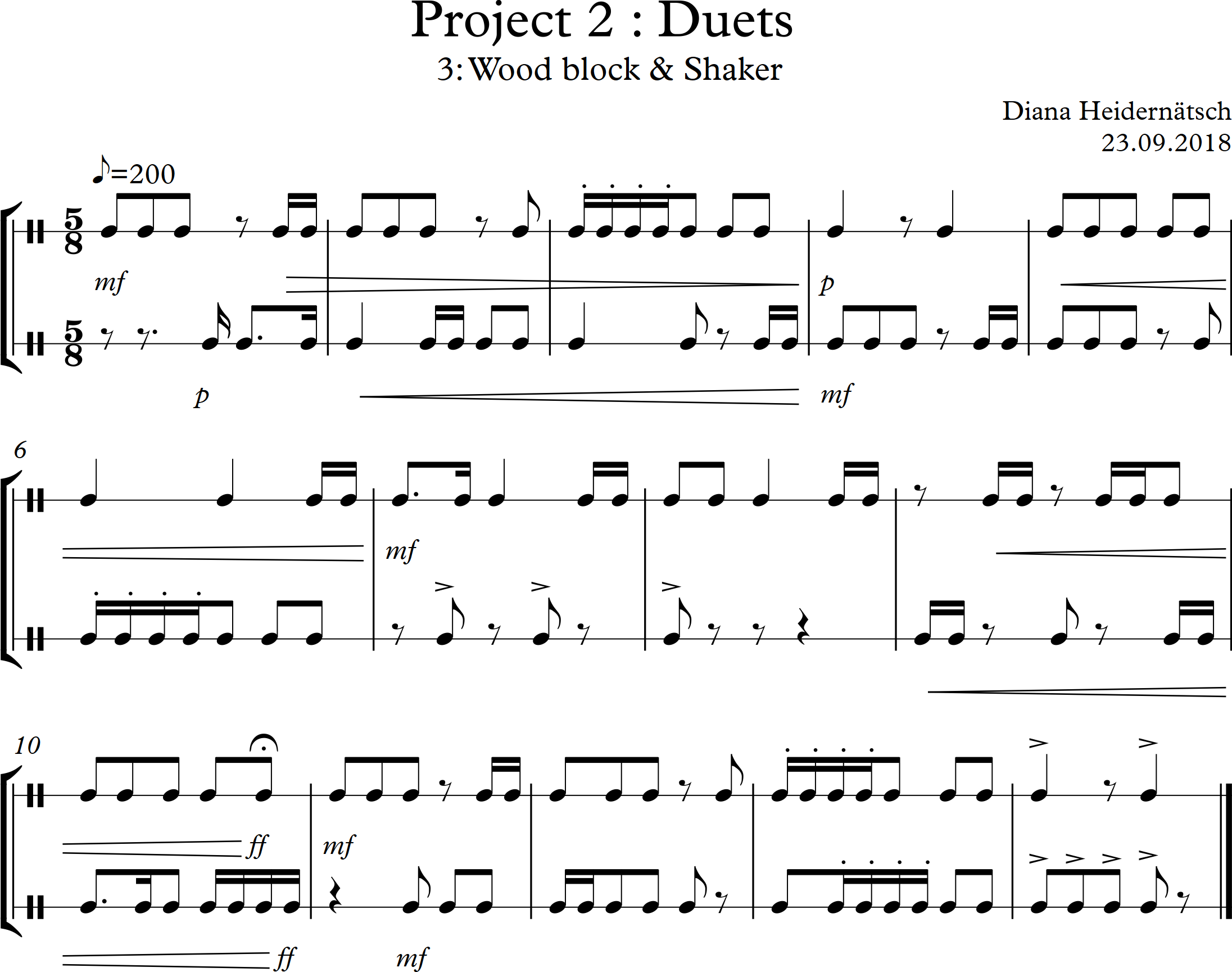
Due to the fact that I had already written a piece in a 5/4- time signature (Project 1; 3: Cajon), I did not have too many troubles to get a feeling for the unusual rhythm.
The shaker supports the wood block, playing the motive for this piece from bars 1- 3, where they swap roles and the wood repeats the first 3 bars. From bars 7-8 the woodblock plays a slight variety of what was played by the shaker from bars 1-3. A b-part of the part can be heard in bars 9 and 10, whereas bar 10 already indicates the start of the main-themed a-part coming up. Delayed by one crotchet both of the instruments repeat the beginning of the piece until they come to an adjusted varying end.
4) Claps & Stamps
This piece I started in a rather unusual way: I wrote it for the piano (using only a small range of notes) in a 7/8 time signature, before I transferred it onto untuned percussion. (Body percussion in this case).It took me a while to get into the mood of the rhythm. This one is counted 3+4.
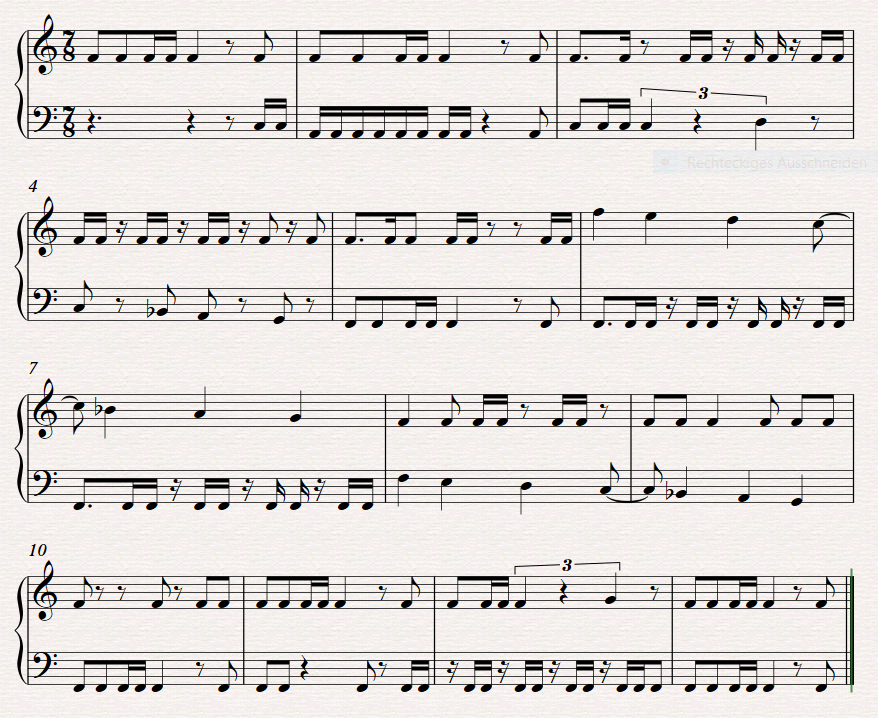
The piece I started with, knowing that it would only be for untuned percussion in the end, I mainly tried to stay on the “f”
The first upcoming “theme” is produced by clapping, it only is played for one bar until being repeated in the second one. The “stamps” support the “claps” from the second bar on. In bar 3 the “claps” start with 3 semiquaver notes (always with one rest in between with the length of one semiquaver), which are being repeated right afterwards in a quieter way. This “semiquaver-motive” can be heard again from the “stamps” in bars 6-7 and 12-13. Bar 6 also indicates is the start of a little side-theme, which can be recognized trough the crotchets, stared by the “claps” until, in bar 8 the “stamps” take over. In the 10th bar the “stamps” come back to the very first theme, which is then, again, repeated by the “claps”. The theme is being played contemporaneously for a last time in the last bar.
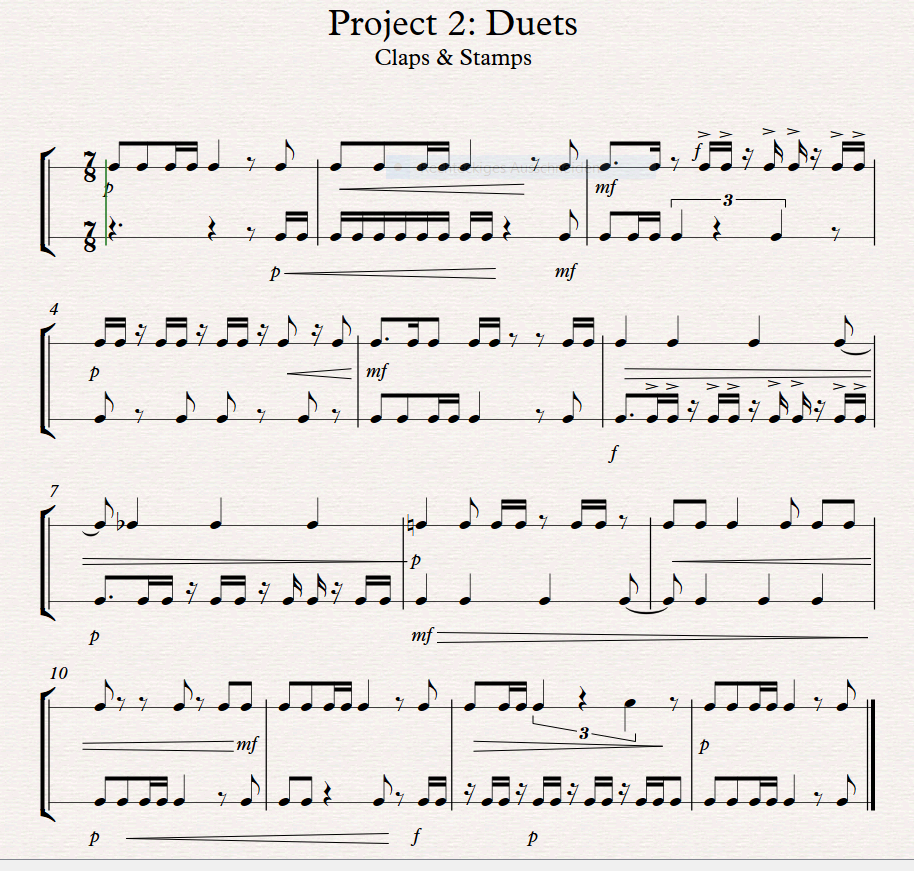
The final version, the sound is produced only through body-percussion.
Project 3: Three and more instruments
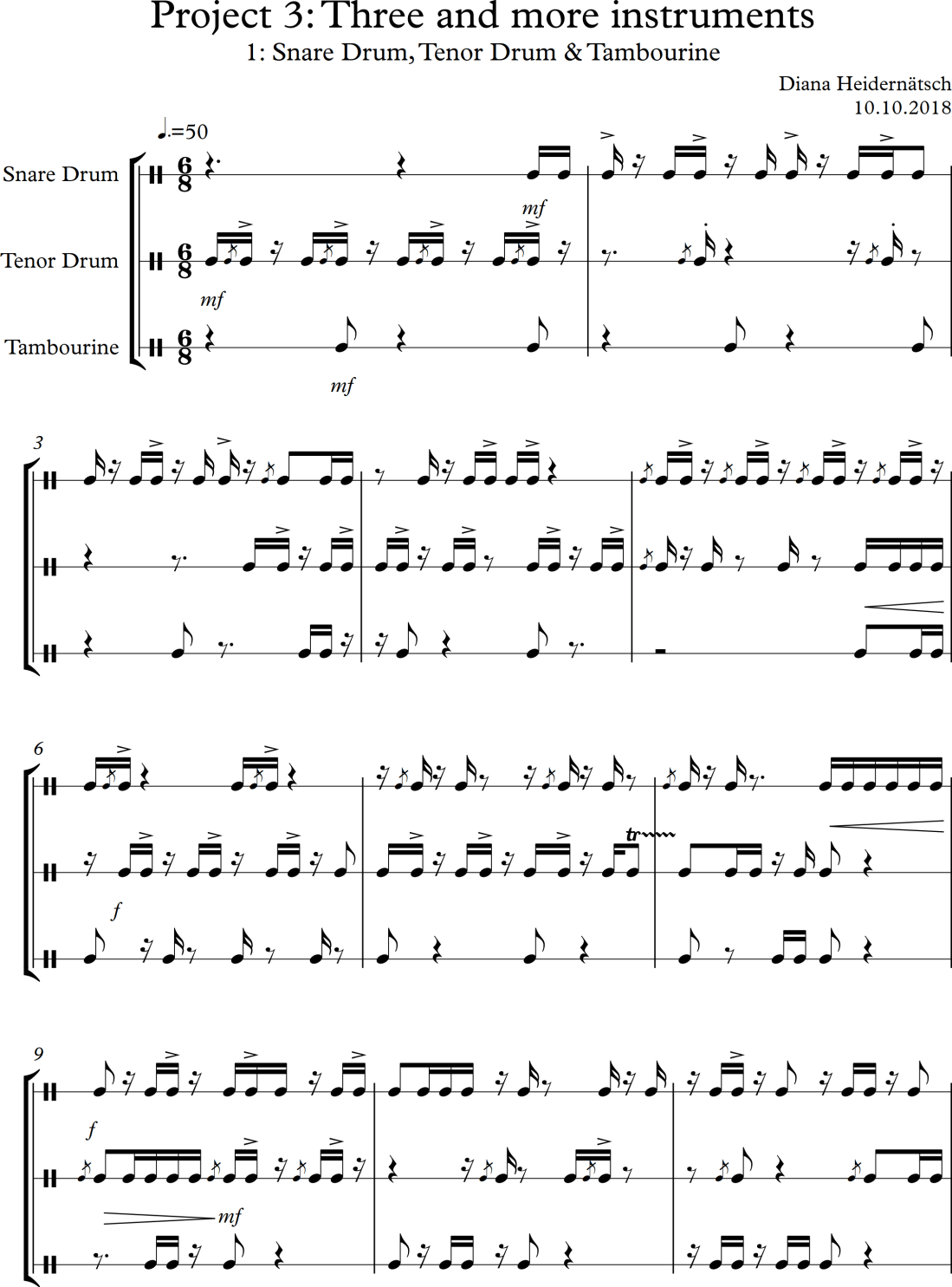
1) Snare drum, Tenor drum & Tambourine
Snare Drum, Tenor Drum & Tambourine
Having had the freedom to modify a given piece, I took the idea for the time signature and instruments from the first given example under project 3 (example 9).
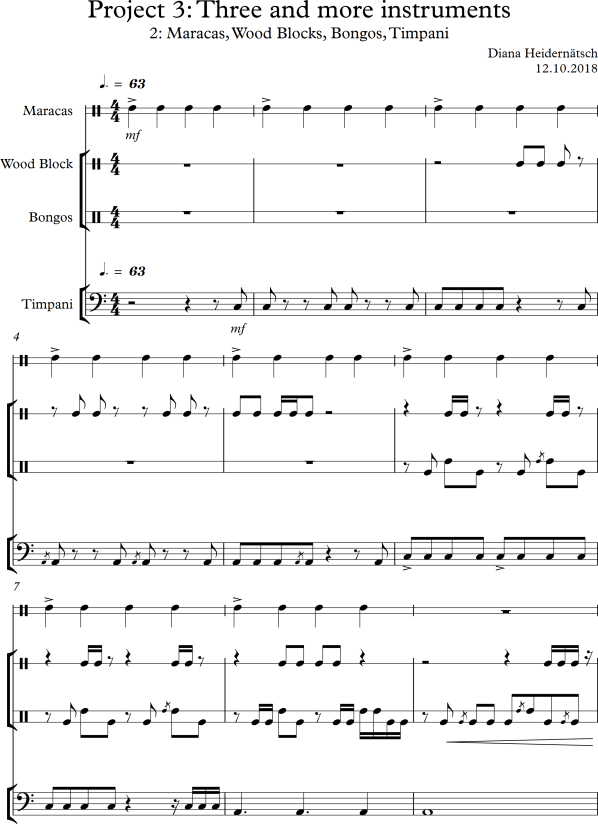
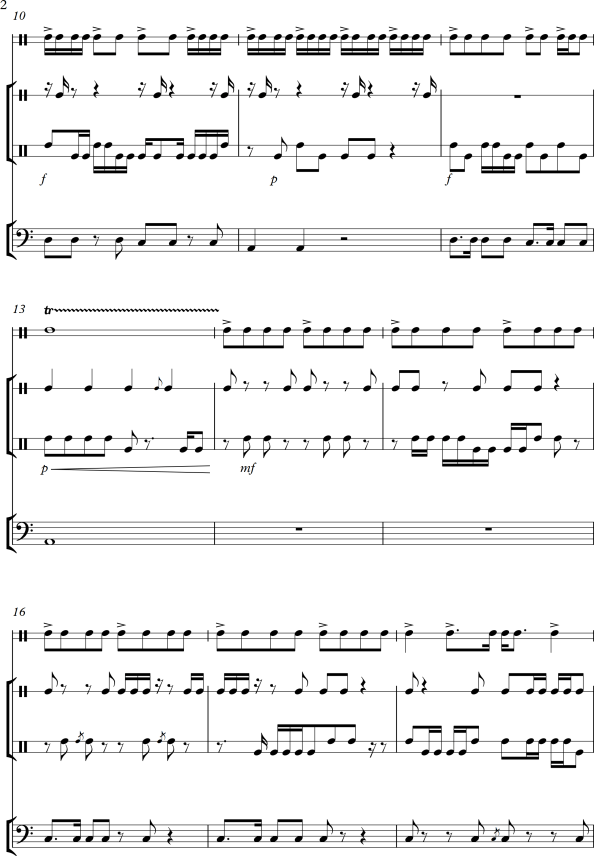
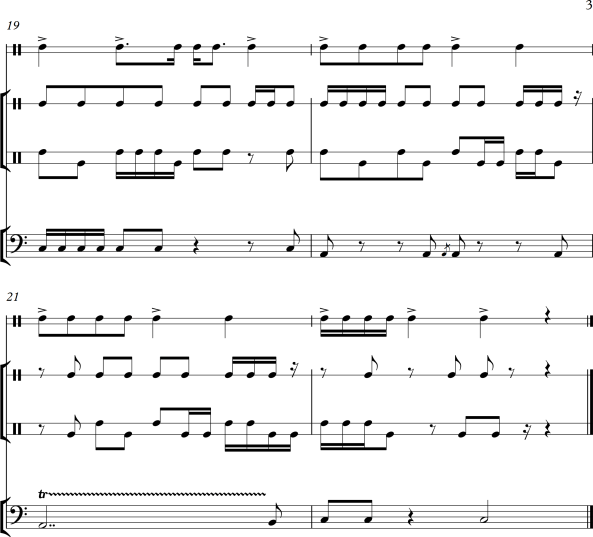
Maracas, Wood Block, Bongos, Timpani
Surprisingly, it was more of a challenge for me to write a piece using only one instrument than to write one for four. Seeing that I had more material to work with, it also ended up being slightly longer than my previous compositions.
Except for one little Bongo-Solo (bars 9 to 13) the piece is arranged polyphonic. Even though this part of the course focuses on unpitched percussion, I allowed myself to insert a simple melody ( only using C, A, D and one single B as a leading-tone) played by the Timpani.
Project 4 : About structure
The given task for this project is to create a basic structural design for the asked composition of the first assignment.
Exercise: Compositional Plan
The given task for this project is to create a basic structural design for the asked composition of the first assignment.
Despite the given examples (12-13) in my OCA folder, I found, that I can work better from A to Z rather than to know exactly in advance what part B and C of my composition would contain. Knowing though, that I should keep close to the provided “basic structural design”, I created a scene, of which the smaller parts are put into one of the three sections.
Basic structural design:
A+B (Pricipal Section); C (Subsidairy Section); B+A (Principal Reprise); A, B or C (Closing Section)
The scene starts with the given intro of “Wild-Dance” (1), the remains were added by me (2-8) :
- Enter a group of demons
- A mother can be seen in the centre of the stage; she has her arms around her young daughter to shield her from the demons
- The demons ask the girl very kindly to come with them
- The girl becomes scared and claws herself onto her mother
- The mother tries to calm her child
- The Demons forcefully wrest the girl from her mother
- The child tries to tell her mother, that she is feeling much happier now
- The demons and the girl leave the room, leaving the mother in the centre of the stage, crying
I put those eight parts under the following sections:
- Parts 1-3 are included in sections A (which I linked with the demons, due to the introduction) and B (introducing the mother and her child)
- Parts 4 and 5 are put into section C, seeing that those two parts exclude the demons, I only worked with the instruments which were reflecting the mother and the daughter in part 2.
- Parts 6-8 are included in sections B’ (a variation of the first B-section) and A (including slightly hidden echoes of section C (used as the Closing Section)
Furthermore, I tried to work out the scheme of the changing time signatures from the provided part of the “Wild Dance”. Even though I would have had several options to continue with a high variety of time signatures, I decided to stay with the given ones for parts A and B, always adding two bars in each round.
The time signatures (which are changing after every bar) from the first 12 bars (excluding the first two bars with a 2/4 –time signature as an exception) are:
5/8 – 3/8 – 6/8 – 5/8 – 3/8 – 4/8 – 3/8 – 4/8 – 6/8 – 5/8 – 3/8 – 6/8; with that given I looked for several ways on how the pattern could continue and resolved on the following :
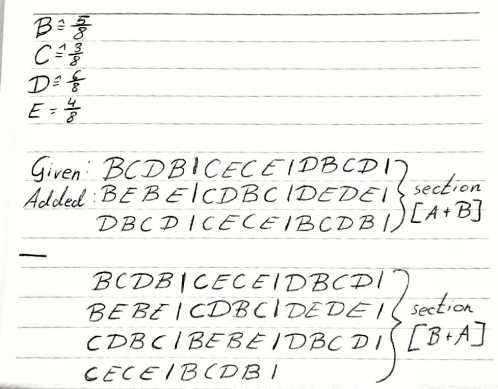
Knowing that the middle section “C” is supposed to be a contrast to A and B, I might use other time signatures.
The whole piece is supposed to last between 2 and 3 minutes. I am planning on mainly staying in the same tempo (one crochet note = 120). The given part at the beginning takes about 15 seconds (excluding the first two bars). When one connects those 15 seconds with the time signature plan from above, the time of the principal section and the time of the principal reprise would sum up to about 105 seconds, which gives me the freedom of using a minimum of about 30 seconds and a maximum of 1 minute for the Subsidiary section (C-part).
I found it easier to link every character with several instruments. Having given a “group” of demons entering the stage, I combined them with the four instruments they started with ( Cymbals, Tambourine, Snare Drum, Bass Drum)
The mother is mainly linked to the Cajon, which makes a strong, rather low sound in comparison with the Castanets, which are combined with the child. They both share the Bongos and the Shaker.
Research Points:
1) Boris Blacher and the Variable Metre
The fist research point, given with the second project, is about a rhythmical structure introduced by Boris Blacher. It also contains a request to listen to his “Second Paganini Variations”- which will be listed in my Listening Log.
Boris Blacher was born on the 19th of January 1903 in Niutschang, China. His father was from a Russo-Asian-Estnian background, his mother was German. Due to his fathers’ work the family had to move quite often. Bacher started having piano lessons at a very young age and worked as a stagehand for the Siberian opera company with 14 years. In 1922 he moved to Berlin to study architecture and mathematics before he came back to studying music in 1926 for seven years. 1938 the conductor Karl Böhm offered him a position as a teacher, which Blacher had to quit one year after, because his “teaching did not accord with National Socialist policy”. (Boosey & Hawkes,2018) Having been quite a popular teacher, he came back to his post after the war. His potential as a composer was found in 1947 with the premier of his orchestral variations on a theme by Paganini. He died on the 30th of January 1975. 1,2,3
As well as many other well-known composers of the 20th century, he tried to explore the structure of music. Being inspired by Arnold Schönbergs twelve-tone-technique he introduced “Variable metre”. “The size and sequenze of the bars is determined by a given series.” 4 (de Leeuw, 2014)
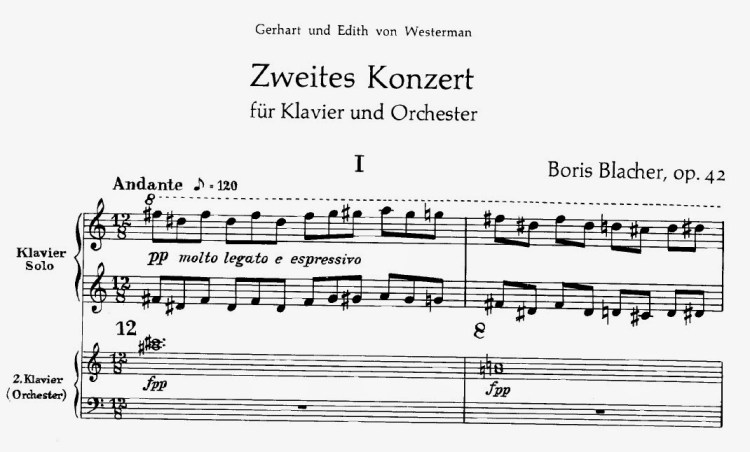
A well-known piece by Boris Blacher based entirely on the sturcture of Variable Metres. It’s structure starts with 12/8 in the first bar, then goes to 8/8 in the next one. The third bar starts again with 12/8, followed by 8/8 and the fith bar includes 7/8. After that it comes back to the 12/8, building itself down again and adding another smaller bar, etc.
References:
1 Boosey & Hawkes, a concord music company. (2018) Boris Blacher. (online) Available at: https://www.boosey.com/pages/cr/composer/composer_main?composerid=2809&ttype=BIOGRAPHY&ttitle=Biography
2 Haider, C. (2011) Biographie von Boris Blacher (1903-1975) (online) Available at: http://www.flutepage.de/deutsch/composer/person.php?id=1079
3 Cumings, R. (2011) Boris Blacher (online) Available at: https://www.allmusic.com/artist/boris-blacher-mn0001533505/biography
4 de Leeuw, T. (2014) Music of the Twentieth Century- A study of its elements and structure. ed. Amsterdam University Press, p.56
2) Marc Zoutendjk & Percussion
At this research point, I was asked to search for the website “Marc Zoutendijk Percussion Information” to have a look at a list of pieces featuring percussion.
Furthermore, I was asked to look at for several other percussion pieces, which will be listed in my Listening Log.
Listening Log
Second Paganini Variations- Boris Blacher
Even though it starts with a cheerful sounding solo-violin-part I would describe the general mood of the whole piece as mysterious or/and curious. It builds itself up as more instruments are being added, including the mentioned violin as well as other string instruments such as a cello and double bass. Furthermore, besides the use of other orchestral wind instruments ( western concert flutes, bassoons, trumpets, trombones, tubas and french horns) one can especially often hear the clarinet. One instrument that I was able to identify from the drum-instrument section where timpani.
Several times, Blacher only used a certain group or family of instruments, there are smaller parts for example, which are only (or mainly) being played by string- others by wind instruments. Structurally I noticed, that he often started with a quiet motive, which then flows over into a crescendo until it ends abruptly with a fortissimo.
I personally quite enjoyed listening to it, which surprised me, because I was counting on something that sounded more similar to Schönbergs twelve-tone-music. (I am really fascinated by the process and mathematics behind his concept, but I don’t like listening to it.) The piece sounded so incredibly diversified, that I only noticed themes and motives repeating themselves after the third or forth time of listening to it. Despite the fact, that the piece was so varied, it was still entertaining enough for me to follow it to the end.
John Cage- Third Construction
„Construction“ is he title of three compositions, written by John Cage between 1939 and 1942. 1
The used instruments are: rattles, drums, tin cans, claves, cowbells, lion’s roar, cymbal, ratchet, teponaxtle, quijades, cricket caller, and conch shells.2
Cage used the “square root formula” for all three pieces. The third construction is arranged in 24 sections which are divided in 24 measures, all played differently by the percussionists3 :
Player 1: (2;8;2;4;5;3)
Player 2: (5;3;2;8;2;4)
Player 3: (3;2;8;2;4;5)
Player 4: (0;2;4;5;3;2)
References :
1Content from Wikipedia.(2018).Construction (Cage). (online). Available at: https://en.wikipedia.org/wiki/Construction_(Cage)
2Kuhn, L. (2016) John Cage-Third Construction. (online) Available at: http://johncage.org/pp/John-Cage-Work-Detail.cfm?work_ID=204
3 Parolini, P.(2015) John Cage’s Third Construction-Part 2: Analysis. (online) Available at: https://paoloparolini.com/third_construction_analysis/
 Bluefoxxmusic