Learning Log
- Project 1: Gesualdo and Madrigals
- Project 2: Palestrina and the Mass
- Project 3: Species Counterpoint
- Research Points
- Listening Log
- Ah, Dolente Partita – Claudio Monteverdi
- Belta poi che t’assenti – Carlo Gesualdo
- Caro dolce ben mio, perche fuggire – Andrea Gabrieli
- Now is the month of maying – Thomas Morley
- Mass – Hindemith
- Missa Papae Marcelli
- Matona, mia cara – Orlando di Lasso
- Requiem in d-minor – Mozart
- Sweet honey-sucking bees – John Wilbye
Project 1 : Gesualdo and Madrigals
For this very first project of the course, I was asked to listen to the madrigal Beltà poi che t’assenti, by Carlo Gesualdo. My comments on the piece itself can be found in my listening log.
In the following paragraphs I will answer the 5 questions about the piece, which were given with the exercise.
- With reference to a score, identify the chords in the first four bars.
I found a score in the Petrucci music library under the following link : https://imslp.org/wiki/Belt%C3%A0_poi_che_t’assenti_(Gesualdo%2C_Carlo)
The first four bars involve the following chords: G, E, D, G, D, F# (all major)
- Does this chord progression call to mind any music you know from later areas?
I couldn’t think of anything those chords would remind me off from any later epochs. Nonetheless, initially I had to think of the piece “Qui tollis, pecata mundi”, in Antonio Vivaldi’s “Gloria”. A few years ago I had the opportunity to sing the alto voice of this piece with a choir. Even though Vivaldi was born about 100 years later than Gesualdo, they are part of the same epoch.
- How would you describe the music from bars 9-20 and the texture from bars 40-42?
The mood of the music from bars 9-20 can be best described as slightly threatening, nervous and pressurising, this may be due to the polyphonic structure. From bars 40-42 the music starts to become faster and all voices have the same text at the same time, in contrast to most of the rest of the piece is this part therefore homophonic.
- What does the word ‘dolore’ mean at bar 55?
I was able to find a full translation of the score
Beltà poi che t’assenti, come ne porti il cor
Porta i tormenti. Ché tormentato cor
può ben sentire, La doglia del morire,
E un alma senza core, Non può sentir dolore.
Beauty, since you depart, as you take my heart,
take also my torments. For a tormented heart
can surely feel, the pain of death,
but a soul without a heart, can feel no sorrow. (1)
To come back to the question above the word “dolore” here stands for sorrow, or pain.
- In your own words, describe the kind of harmony, melody and texture that Gesualdo as employed to carry its meaning.
One already notices on thing within the first two syllables : The upwards moving G to G-sharp in the Soprano voice gives the whole chord E a hopeful, lovely character, which underlines the word “Beauty” being sung, not referring to any following text.
Also, as already explained under the first point, the first six chords are all major-chords. The text until the end of this phrase is “Beltà poi che t’assenti” (Beauty, since you depart) , the last chord (F#), creates an open sound, that gives the feeling as if it needed to be answered, or suitable to the text, as if a story were about to follow.
The beginning of the next four bars involve the first minor chord (b-minor), and is followed by only major-chords, again. Similar to the first phrase the last chord seems to need an answer to it. The text for this phrase is ” come ne porti il cor” (as you take my heart). Up until this point the voices are homophonic.
The next part is polyphonic, with a nervous, pressurising character. The words “Porta i tormenti” (take also my torments), are being sung several times, due to the colour of sound it gets the the words get a reproachful meaning.
From bar 20 the phrase “Ché tormentato cor” (For a tormented heart…), actually sounds more positive than negative, but also expectant, which may be due to him being about to explain the following phrase “può ben sentire, La doglia del morire,” (…can surely feel, the pain of death,). The music coming along with those words suitably becomes incredibly dramatic and sad.
The short phrase “E un alma senza core” (but a soul without a heart), starts in a faster pace and again and sounds more cheerful than sad. Gesualdo also used a homophonic rhythm for this part, which may again underline the last phrase “Non può sentir dolore” (can feel no sorrow). Despite the last few bars being in minor, the very last chord is dissolved in to a major one, which may indicate, the man in the story is hoping to not having to think about his broken heart anymore.
(1) Gibb, J. (2019) Beltà poi che t’assenti (Carlo Gesualdo) [online]. Available at : http://www2.cpdl.org/wiki/index.php/Belt%C3%A0_poi_che_t%27assenti_(Carlo_Gesualdo) [Accessed 01 Mai. 2019]
Project 2 : Palestrina and the Mass
For the second project I was asked to listen „Kyrie“from Giovanni Pierluigi Palestrina’s „Missa Brevis“, and refer to a score when one of the points further down occurs. Unfortunately, I didn’t manage to get as PDF of the score as a download, but it can be viewed on the Petrucci Music Library under the following link: https://imslp.org/wiki/Missa_brevis_(Palestrina,_Giovanni_Pierluigi_da).
- The entry of each vocal part is in imitation.
From my previous musical education, I learned, that imitation is, as the name already indicates, a form of repeating or reflecting a phrase of a piece. As the “Kyrie” is divided into three different parts, indicated by doubled bar lines, there are three different entries to consider.
Within the first seven bars every voice has its first entry. Even though they start on different notes ( Cantus on C, Altus on G, Tenor on F and Bassus on C again), the intervals in between the first eight notes sung by every individual voice, are always the same.
After the first doubled bar line, the middle part starts, which has its entries, again, within the first seven bars. The staring notes of this part are, put into order: C, F, C, F, almost the same starting notes as the first time, but without a “G”. For this part, it’s the first 5 notes which have the same intervals in between them.
For the third and last part, one can find different starting notes again, which surprisingly are the same as they were for the first entry. In order of the voices: C, G, C and F. For this part the first ten notes have the same intervals in between them. It should also be mentioned, that even the lengths of the notes are noticeably the same.
- The texture is polyphonic – consisting of several independently moving, though coordinated, vocal parts.
The entries already starting in a distance of maximum seven bars, already indicates that this piece is polyphonic. Even though the first few notes of every part are following the same progress, they all carry on to independent parts. The only noticeable phrases where they come together at the same time are at the end of every part (always the last bar before a doubled line). There are a few more passages, where only two or three voices sing at the same time, which almost gives an effect of one melody being more important than another one.
- The melody lines themselves move smoothly – mainly flowing by step with occasional leaps but then often turning back and returning to where they came from, or nearby.
Examining the three parts separately again, one can see that in the first part, not only with the first entry, but also with all the other starts of the phrase “Kyrie eleison” has a similar note progression. Most of those phrases often just go up and down single notes, which keeps the piece flowing. Within the single phrases, the notes tend to just move around in small steps. The biggest changes in pitch can be noticed, anytime a new phrase starts, for example the octave in bar 14 in the Bassus-voice. The second part of the piece seems to be slightly different. Even though the notes stay near to one another, and only make small steps, there are no major jumps from one phrase of “Christe eleison” to another one. The third part is similar to the first again.
- Each part rises and falls, helping to create a sense of direction but with no single part assuming dominance over the others.
Even though this statement is generally true, one still has the feeling at several small parts, that one voice sticks out. One good example for that would be bar twelve, with the high voice of the cantus having its first entry. The effect of this voice sticking out only lasts for one or two bars.
Furthermore, the piece keeps its fluency through the separate phrases starting and ending at different times. It has to be noted though, that at end of every part, every voice always ends with the same syllable with the same note length. Even though it’s always a chord being sung (different notes for every voice) it always has a strong contrasting effect, when all the voices sing at the same time. Due to that also creating a strong “ending” of every phrase, the voice that starts the parts after always seem to stick out slightly.
- The ranges of the individual voice parts lie mainly within an octave and there is a general sense of balance to the individual melodic lines. They rise and fall in about equal measure, exploring the full range of the voice evenly.
The range of the individual voices are D4 to F5 for the Cantus, B3 to A4 for Altus, F3 to F4 for Tenor and A2 to C4 for Bassus. The statement about “the rise and fall” is already mentioned in the previous page. As already mentioned, within a phrase, the space between the notes always changes in small steps, which gives the piece its fluency.
- The words are repeated and are clearly audible. The words overlap, each part at times following, at times leading, to create the musical texture.
Here too, the repetition from different voices and overlaps of the words, keep the piece very fluently. In addition to that, I’ve listened to several recordings, whereas all of them were completely understandable in terms of the text. As too already mentioned, towards the end of each part, the phrases come more frequently, so that all the voices can resolve at the same word, at the same time. I personally found it easier to listen to understand the separated words rather than the ones sung together by all the voices, they seemed to be a bit more distorted.
Project 3: Species Counterpoint
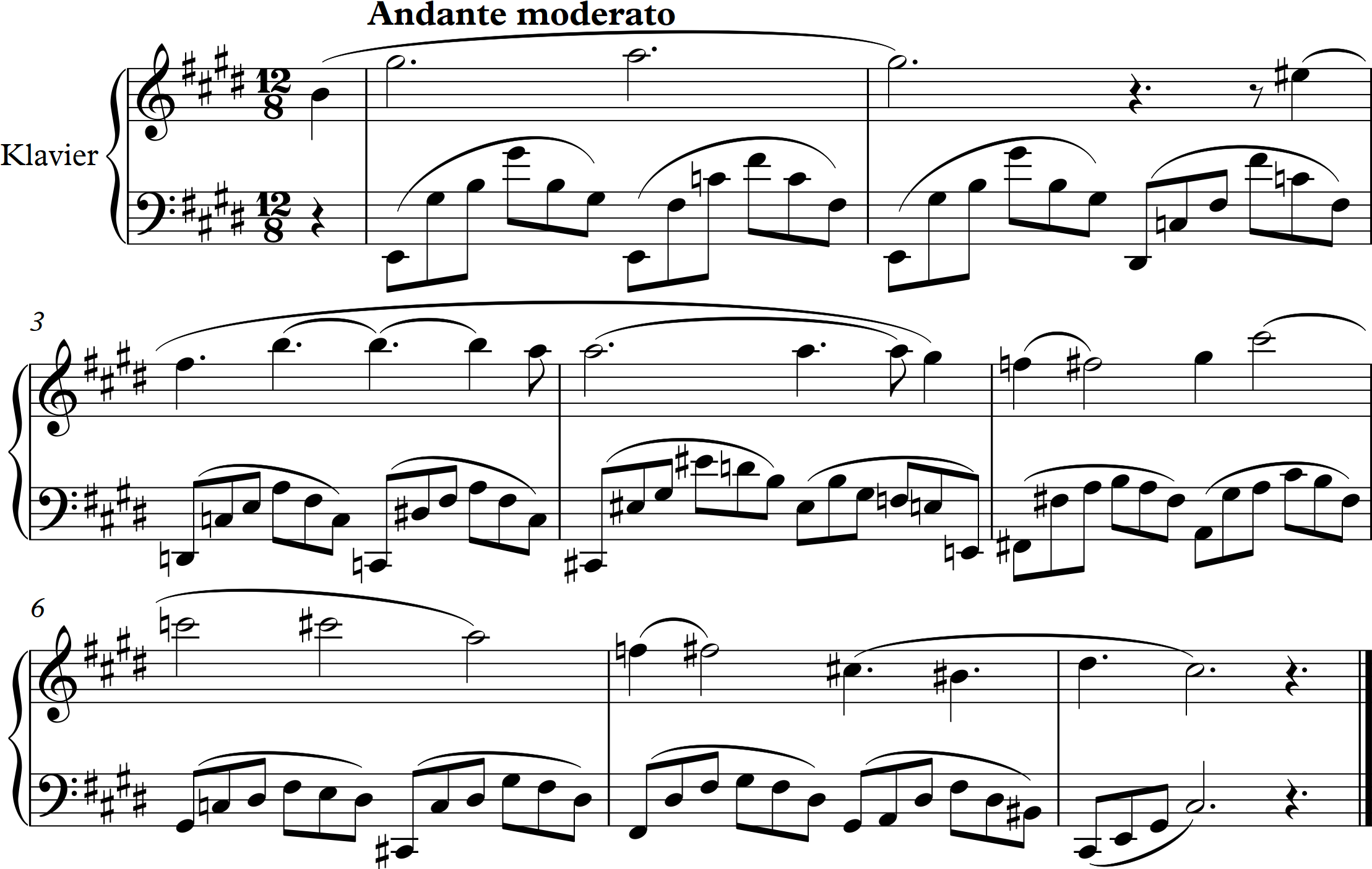
This project included the task for me to write three different ornamented versions of the following melody written for the piano:
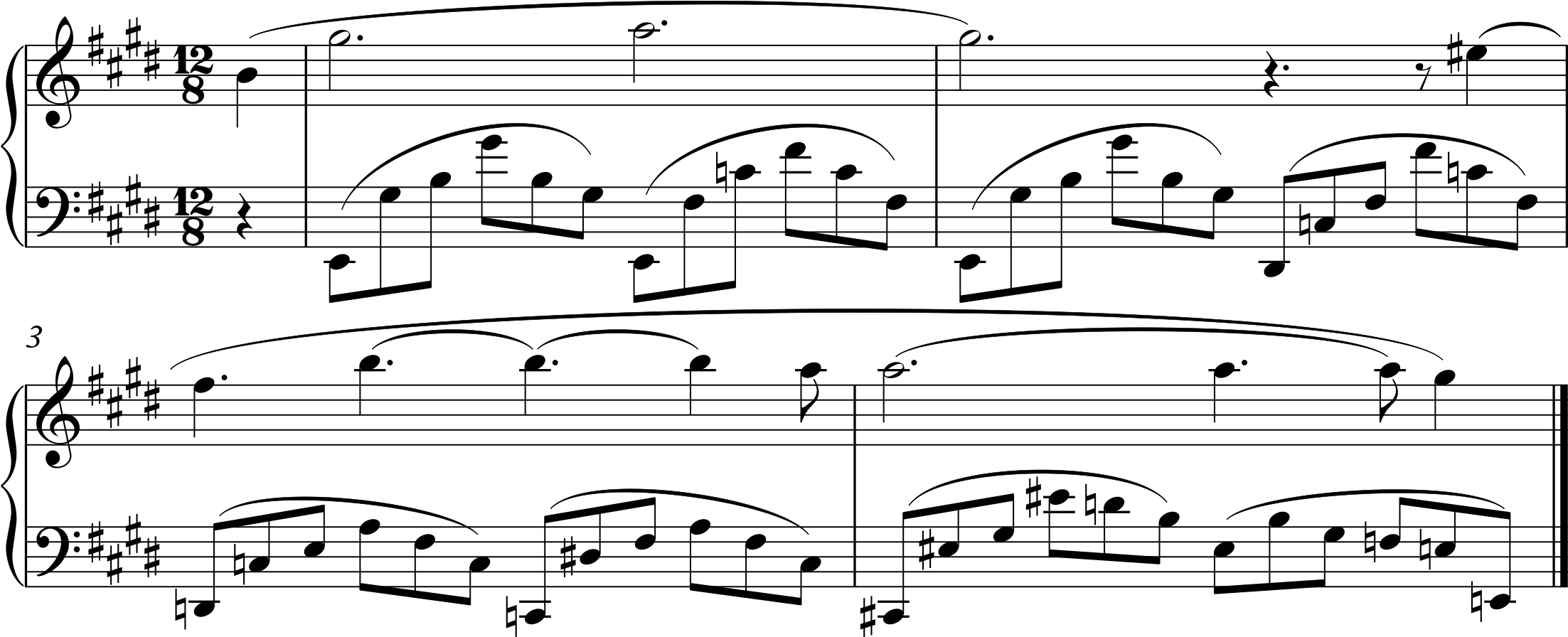
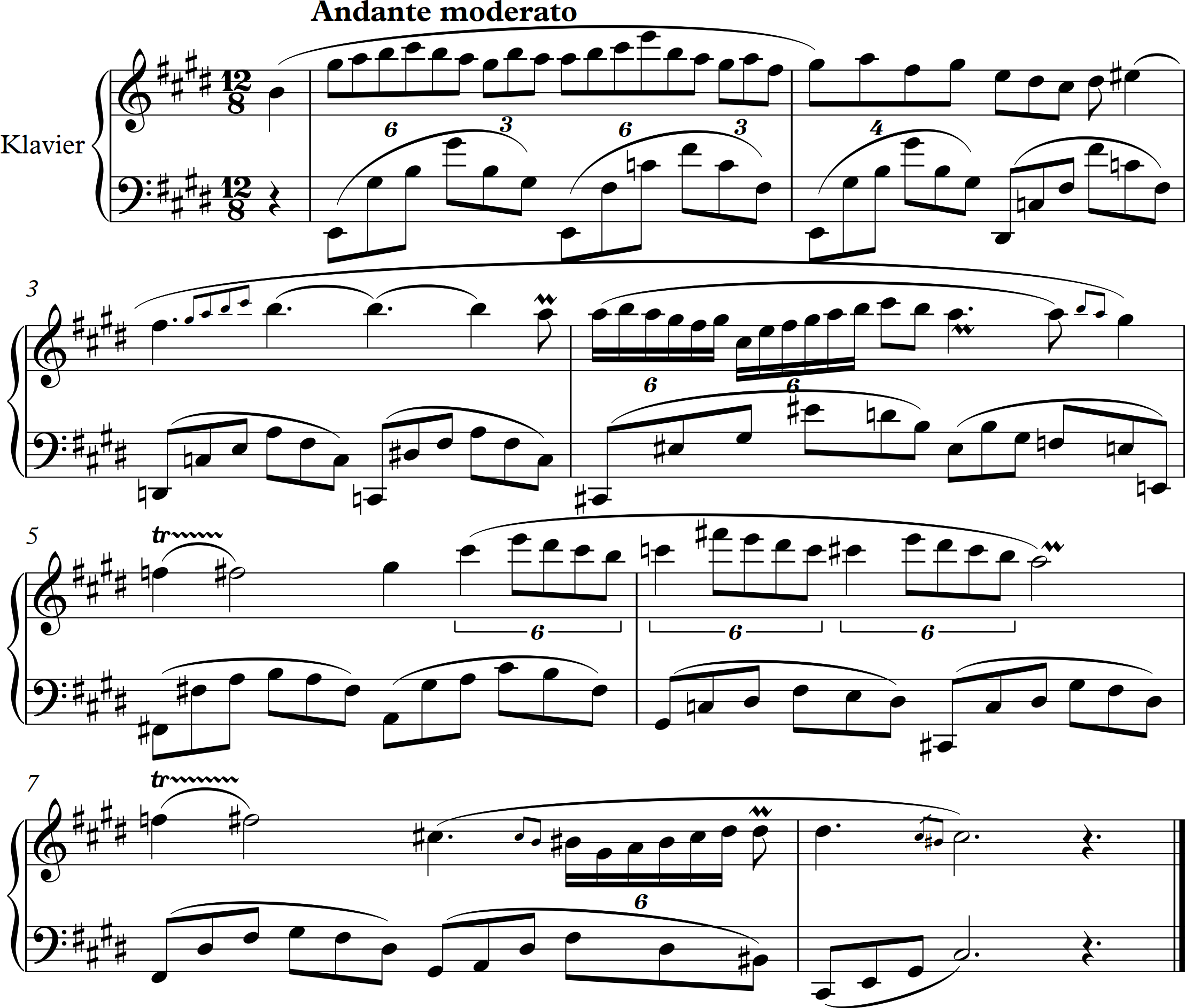
The ornamented versions are the following:
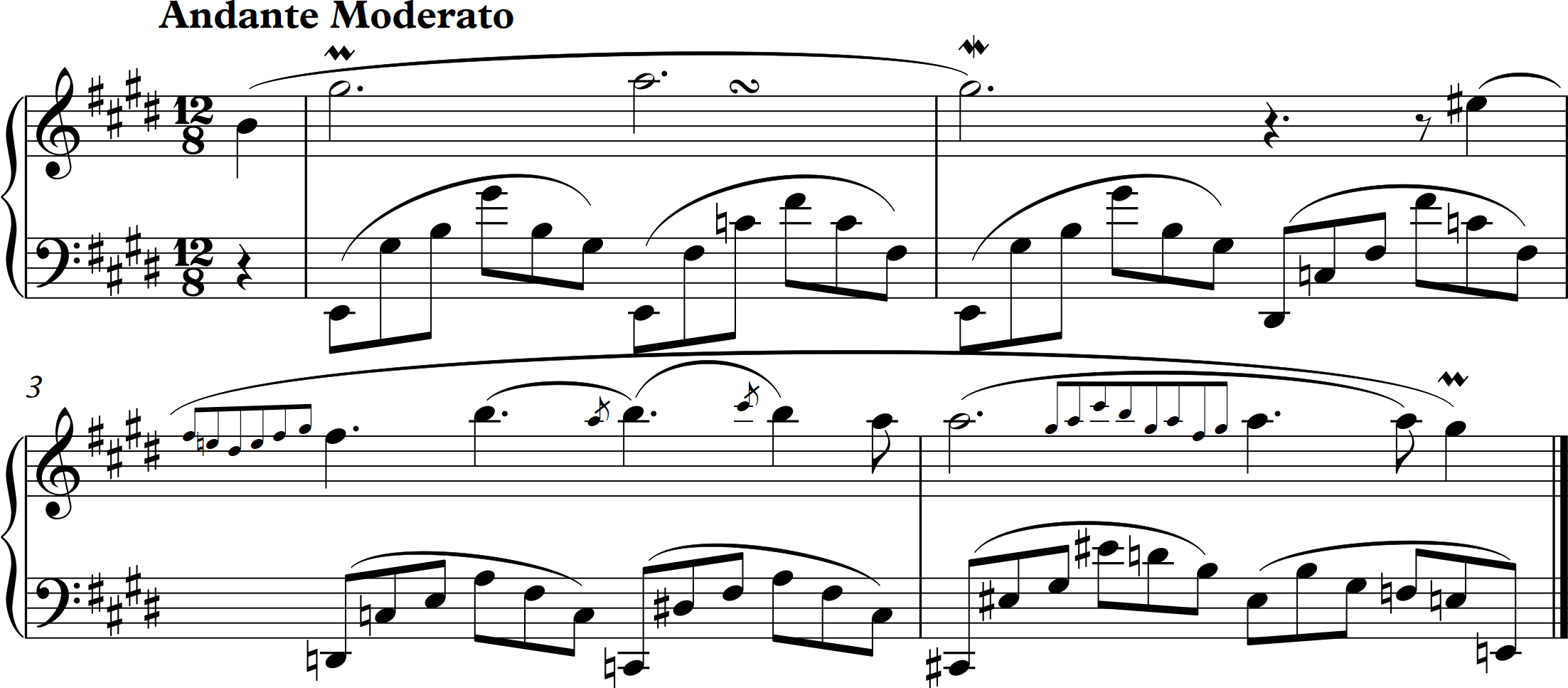
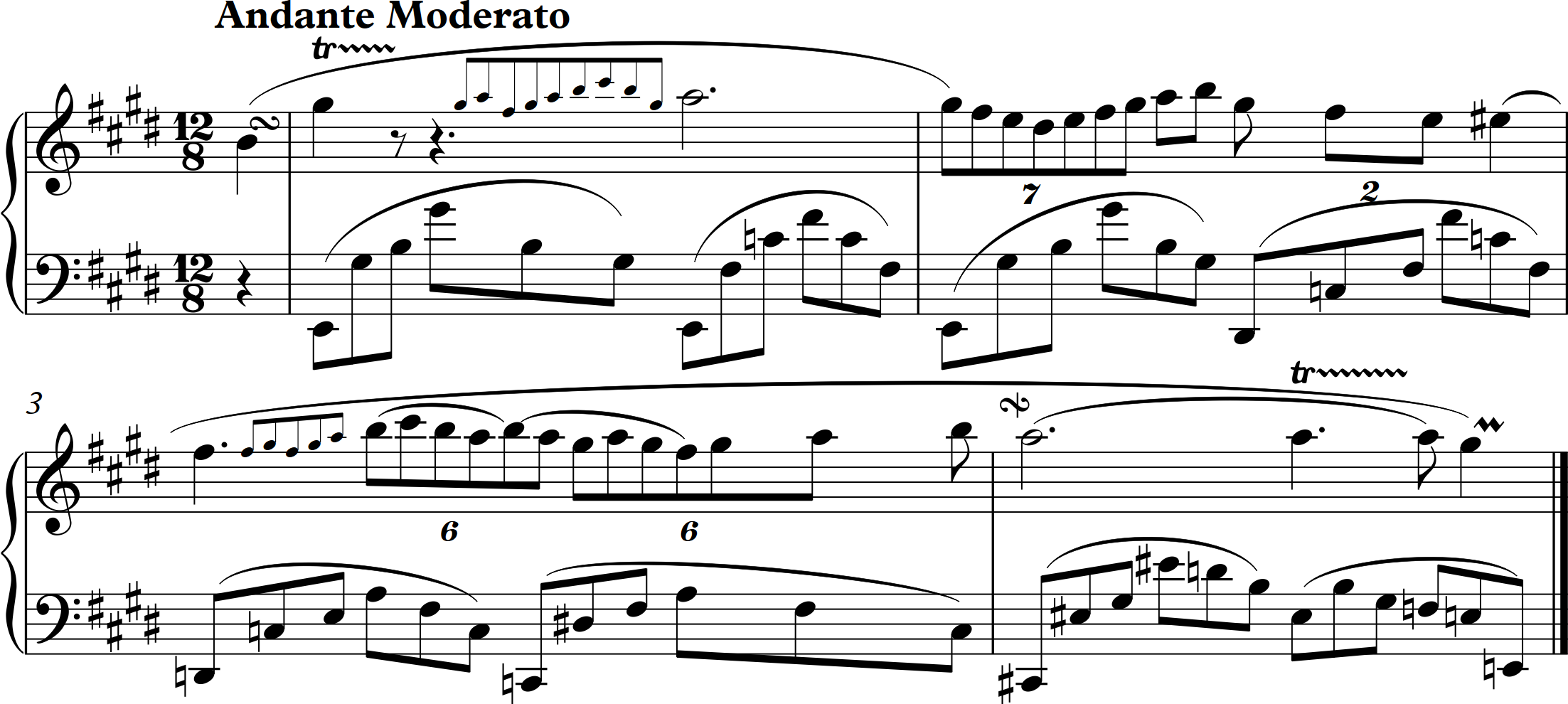
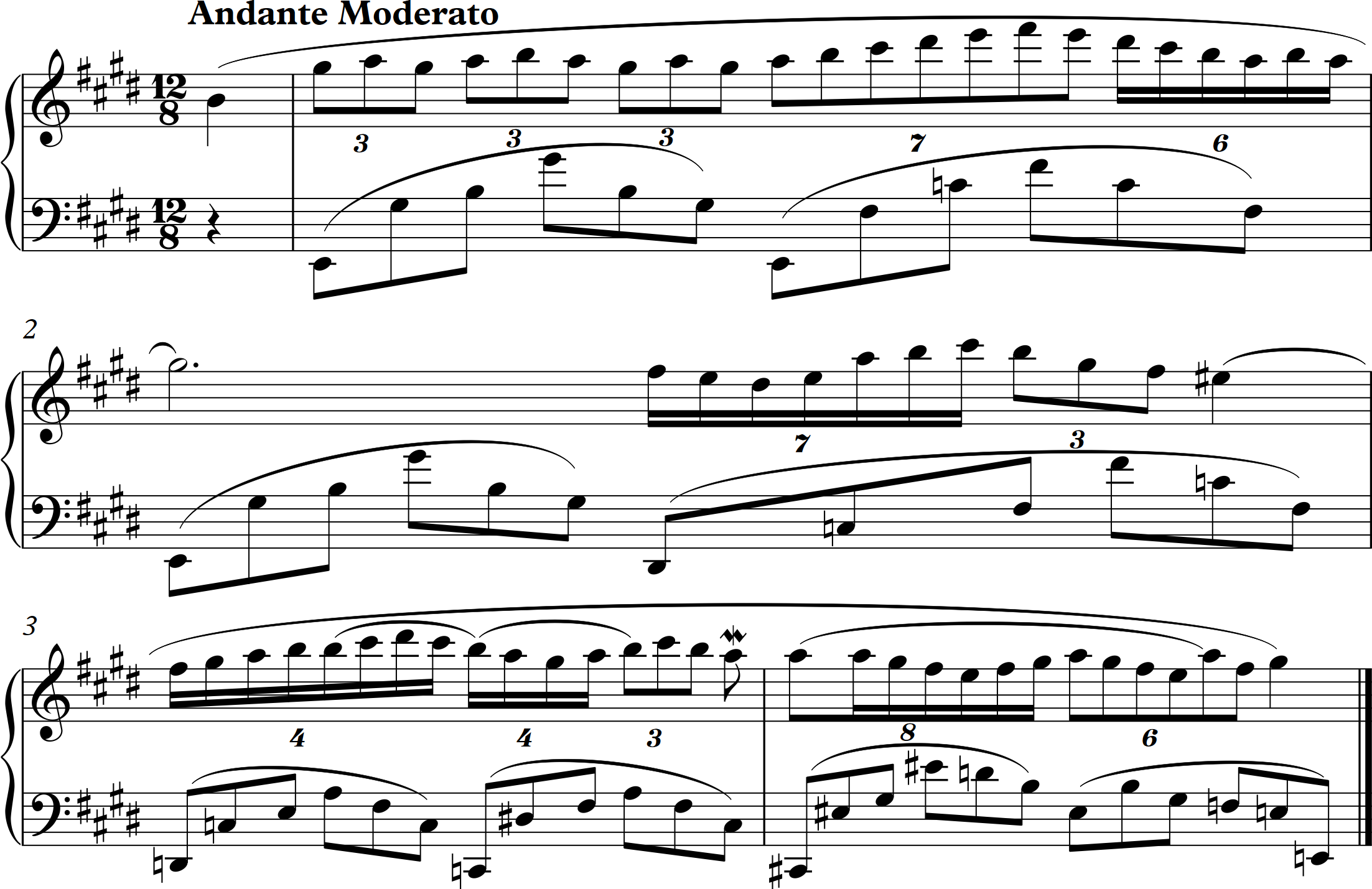
I was furthermore encouraged to add four bars of my own to the piece and put ornaments in it again. The basic melody is the following, after which the ornamented version can be seen:
Research Points
Rp1: Renaissance madrigals
For this Research point I was asked to compare two of the pieces from project 1, and their composers.
I chose to analyse the lives and works of Orlando di Lasso and Claudio Monteverdi, due to their pieces being quite contrasting.
Orlando di Lasso, who lived from 1532 to 1594, was born in todays’ Belgium and is declared as “the most published composer of the sixteenth century. He is mostly known for his work with different genres and styles as well as his ability to reflect his compositions onto the text being sung. 1
Claudio Monteverdi, was born 35 years later in 1567 in Cremona, Italy. He is one of a few musicians from this time whose pieces are still being played today. Monteverdi had an important influence in the music history as his composition “L’Orfeo” (which tells the Greek story of Orpheus and Eurydice) is officially seen as the very first opera. 2
Unlike Monteverdi, Lasso didn’t grow up in a musical family, nevertheless, he participated in several choirs from a very young age, were his talent for singing and a beautiful voice was discovered. Di Lasso traveled a lot, stayed in a few places as he started to write his own music. His pieces where mostly religious, and even though he wrote his first piece with only 15 years (music to a poem from Giovanni Battista, his first composition was only published at the age of 23. Within the following 40 years his music spread rapidly and was often heard. 1
Monteverdi’s parents were both musicians, so he was introduced to music when he was still very young. He already wrote and published his first pieces before he became 15. His style was always traditionally based, but all of his pieces also had a modern side, which makes some of them sound like they were contemporary pieces. He also experienced a lot with chromatic modulations and as already mentioned, Monteverdi was most known for the opera “L’Orfeo”, and therefore played an important part in the historic evolvement of music.2
Orlando Di Lasso’s piece “Matona, mi acara” is cheery sounding and addresses, due to it being a madrigal*, a non-religious subject. It sounds, in comparison to other pieces from this epoch, really modern. In my personal opinion it has similarities to a 19th/20th – century Christmas-choir piece. (Even though the content is about something completely different)
The piece I chose from Monteverdi (“Ah, Dolente Partita”) is slow paced and has a sad character as well as content. Unlike other pieces from Monteverdi I’ve heard so far this one seemed, as already mentioned in my listening log, rather monotonous. That, of course, may be in connection with the story its telling.
Surprisingly, neither of the pieces from the composers, that I’ve listened to reflect their styles. They even seem to be swapped.
*Madrigals are polyphonic pieces from the renaissance and early baroque, which usually have a non-religious content
1 Elridge-carney, J. (2001). Renaissance Reformation 1500-1600 – A biographical dictionary. 1st ed. [ebook] Westport: Greenwood Press, pp. 227-228. Available at: https://ebookcentral.proquest.com/lib/ucreative-ebooks/reader.action?docID=3000571 [Accessed at: 21 May. 2019]
2 Bourne, J. (2013). The Oxford Dictionary of Music. 6th ed. [ebook] Oxford: Oxford University Press. Available at: https://www-oxfordreference-com.ucreative.idm.oclc.org/view/10.1093/acref/9780199578108.001.0001/acref-9780199578108-e-6182 [Accessed 21 May.2019]
Rp2: The Mass
For his research point I was asked to write a short article about the connection of music with religion, describing the mass in detail. In addition to that, I was advised to listen to a few masses myself and add a conclusion at the end. The masses can be found in my Listening Log for part 1 of this course. In addition to the two masses listed I’ve listened to:
- “The armed man”, – by Karl Jenkins, a rather unusual form of a mass, telling a story about a war, written in 1999. Jenkins explores a high variety of different styles, and often creates sound-colours referring to noises and sounds, which resemble a battlefield. The mass consists of around 10 parts, whereas most of them are not parts of usual masses.
- “Missa O quam gloriosum est Regnum”,-by Tomas Luis de Victoria. For the time it was written in (end of the 16th century) it sounded really modern to me. He often uses imitative motifs, whereas all of them keep the same character throughout.
- “Mass a 4”,- by William Byrd, Written in a polyphonic style (as it was usual for that time) , generally a sad and dramatic sounding mass. As the title already indicates, only four voices are being used for it (Soprano, Alto, Tenor and Bass). No instruments are used
- “Mass,-by Igor Stravinsky; This mass I found difficult to listen to, due to the generally dissonant harmonies Stravinsky used. Nevertheless, one could still recognise the contrasting dynamics and playing techniques. A choir as well as a full orchestra are being used.
- “Messe de nostre dame”,- by Guillaume de Machaut; The most unusual thing what I found about this mass is, that the second part “Kyrie” is the longest one. With ALL other masses I’ve listened to so far, it was always the following part “Credo”, which took up most of the mass. No instruments are used, the voices are always singing solo, therefore no choir is used either.
- “Mass in e-minor”,- Anton Bruckner; As I myself already had the opportunity to sing some of Bruckner’s motets, which I always really enjoyed; I was rather surprised that I didn’t find this mass as entertaining. Generally it is sadder sounding, but often changes its character. Both, choir and orchestra are being used.
- “Mass in E-flat-major,-Franz Schubert; With the length of about an hour, this mass counts to one of the longer ones I’ve listened to. Schubert used many different techniques and styles throughout the piece, the changes in tempo are fluently, and therefore barely recognisable. Generally, he creates a good balance between orchestral and choral parts. I enjoyed listening to it.
I’ve furthermore listened to several other Masses from Bach and Beethoven’s only mass “Missa Solemnis”, which were highly entertaining as well.
Music and religion
In the early starts of Christianity, the first connection with music were sung psalms, this idea was taken from the Jewish services. It was conducted by a pastor and the community in a certain rhythm, this form was also called “chanting”.
In the middle ages, the Gregorian Chant (named after pope Gregor, who lived around 600 A.D) developed through the monasticism; New prayers and psalms where sung in services or when the monks where meditating. The sequences of chants such as “Kyrie”, “Gloria”, “Credo”, “Sanctus” , which are still an important part of modern masses, also developed in that time.
Within the decades and centuries after that, several different trends of sacred music was created. Some of it, didn’t find any use in services but nevertheless had religious content. Therefore, well known musicians, such as Johann Sebastian Bach, Wolfgang Amadeus Mozart, or Ludwig van Beethoven are known for religious pieces, which where payed in a concert hall rather than a church.
Today there’s a huge variety of music, which is connected with Religion. The modern version of religious music outside the church covers a massive amount of different genres; from classic, pop, Hip-hop and even metal music. Especially Gospel music from America is popular among young adults.1
The mass
A mass can generally be described as the central service of the Catholic Church with a defined liturgy (order of worship). The, with a few exceptions, still existing form emerged in the 5th century. Up until the 20th century, the language of every mass was Latin, only the Second Vatican Council (1964 – 1969) allowed the Masses to be in other languages.2
There are two main categories a Mass can be divided into: The Ordinary of the Mass and the Proper. The latter always changes, according to the occasion, whereas the Ordinary always has the same sequence of the same text set to music. The separate parts of the Ordinary are: Kyrie (text: Kyrie eleison), Gloria (text: Gloria in excelsis Deo), Credo (text: Credo in unum Deum), Sanctus (text: Sanctus, sanctus, sanctus) and Agnus Dei ( text: Agnus Dei). 2,3
One special form of a mass is the so called „Requiem “. The name “Reqiuem” comes from the first word of the text “Requiem aeternam dona eis Domine (“eternal rest give them, Lord”). The major difference between an Ordinary Mass and a Requiem is, that several texts phrases from the Oratorium and Proprium are slightly different. Gloria and Credo are taken out, therefore follows the sequence “ Dies irae” (Day of wrath) after the “kyrie” The sequence was defined in 1570. One exception of a Requiem is “Ein deutsches Reqiem” (=“A German Requiem”), because it’s text is from German biblical texts instead of the Roman ones. 2, 4
For about 1000 years, up until the the 11th century masses where written for just one voice for the Gregorian chant. With the appearance of polyphonic compositions for two or more voices was developing, due to the composers wanting to set “the word of God” to music in a new, more creative way. At the beginning of the 15th century the “Sanctus “and “Agnus” parts where usually written for the same musical arrangement. The arrangements for the “Gloria” and “Credo” followed at the end of the 15th century. 3,4
When polyphony was fully developed in the 16th century, certain settings elaborated, for example those of Giovanni Pierluigi da Palestrina and William Byrd. It was only two centuries later, that orchestral arrangements became popular for masses, which also brought them into concert halls. This was hardly working against the development of evolving pure instrumental music, especially because for a mass, it was always important that the text stands in the foreground. The instruments should only be used as an accompaniment. Nevertheless, a few exceptions still exist, for example masses which are just instrumental.3
1 Musik und Religion – Musik im Christentum. (2019). 1st ed. [PDF] pp.1,2. Available at: https://www.calwer.com/media/39/LP_3929_Musik_in_Schule_und_Gemeinde.pdf [Accessed 3 Jun. 2019].
2 Heuköufer, N. (2014) Musik Abi – Kompaktwissen Oberstufe. 5th edition. Berlin: Cornelsen Scriptor, pp. 204 – 207
3 Livingstone, E. (2014) The concise Oxford Dictionary of the Christian Church. 3rd ed. [e-book] Oxford: Oxford university press. Available at: https://www-oxfordreference-com.ucreative.idm.oclc.org/view/10.1093/acref/9780199659623.001.0001/acref-9780199659623-e-3710 [Accessed 29 May. 2019]
4 Knapp, W. and Peschl, W. (2005) Wege zur Musik – Band 1. Esslingen: Helbling, pp. 183, 189
Listening Log
- Ah, Dolente Partita – Claudio Monteverdi
- Belta poi che t’assenti – Carlo Gesualdo
- Caro dolce ben mio, perche fuggire – Andrea Gabrieli
- Now is the month of maying – Thomas Morley
- Mass – Hindemith
- Missa Papae Marcelli
- Matona, mia cara – Orlando di Lasso
- Requiem in d-minor – Mozart
- Sweet honey-sucking bees – John Wilbye
Ah, Dolente Partita – Claudio Monteverdi
This piece has a duration of around 3,5 minutes and is generally slow paced. It is written for a mixed choir.
At the beginning the highest voice starts, and all the others join in one after another. The mood of the piece can best be described as plaintive and sad. Often frictions between voices can be heard, due to dissonant intervals, which are mostly dissolved shortly after. It was difficult for me to make out a clear structure, due to the piece being polyphonic.
Towards the middle of the piece the volume increases. The structure seems to be a bit clearer. Often the female voices sing one part of a phrase and the males echo it.
Shortly before the end the one and only major chord appears for the first time.
The Italian text can be translated to the following:
Ah, painful parting!
Ah, end of my life!
From thee I leave and I don’t die?
But I feel
The pain of death
And I feel on leaving
A lively dying,
Which gives life to pain
To let my heart immortally die. (1)
I personally found the piece quite monotonous. It seemed to be still very promising at the very beginning, but there weren’t many noticeable changes throughout. Therefore I got rather bored by it shortly before the half already, which may have been caused by the length, the pieces from this area I’ve listened to were mostly around 2 minutes.
(1) Wikipedia(2019) Ah! dolente partita (Claudio Monteverdi) [online] Available at: http://www0.cpdl.org/wiki/index.php/Ah!_dolente_partita_(Claudio_Monteverdi) (Accessed at: 02 Mai. 2019)
Belta poi che t’assenti – Carlo Gesualdo
Belta poi che t’assenti was written by Carlo Gesualdo, it takes roughly 5 minutes. Even though the score I found for it was written for a mixed choir (Soprano, Alto1, Alto 2, Tenor & Bass), the version I listened to was only sung by men. The piece was written around an epoch where key signatures only started to develop, therefore, I wasn’t able to identify the used key signature. One flat indicates, that it should be in D-minor, but in addition to that Gesualdo used a lot of accidentals throughout the whole piece and a major G-chord at the very end.
The first few bars are homophonic, with a bright character. The first polyphonic part, starting in bar 10 in contrast, creates a more nervous sound colour. That phrase also seems slightly “messy”, when one just listens to it. In bar 39 the music gets a lighter sound again and goes back to a homophonic structure it also increases in tempo, but only for a few bars. It quickly dissolves back into a polyphonic structure, gets slower again and very dramatic until it resolves in a major chord at the end, which actually comes very surprising. The part from bar 39 to the end is repeated.
I personally found it interesting to listen to this piece, but around this epoch, there were also some warmer, nicer pieces developed (for my own personal liking). It was fascinating to see though, how Gesualdo used homophonic and polyphonic textures as contrasting structures fitting to the content of the text.
Caro dolce ben mio, perche fuggire – Andrea Gabrieli
This short piece (length of roughly 2,5 minutes) written by Andrea Gabrieli is about a man whose lover or wife left him. Similar to Belta poi che t’assenti by Carlo Gesualdo, there’s a mix between homophonic and polyphonic passages. The dynamics of the piece only vary a tiny bit, but one can often notice a swap between major and minor keys as well as contrasting paces.
The first phrase, which is the same as the title and can be translated to “Darling, why did you run away” is in the same pace for all voices, which gives the piece a characterfull strong start. The short part after that is polyphonic and seems to be working in echoes: A few voices continue with the text, singing always one syllable which come back as an echo from the other voices. After those two parts there is a repetition from the beginning, although, the used chords at the homophonic part seem slightly varied, more dramatically.
Following comes a polyphonic part, where I couldn’t make out a structure. It sounded incredibly sad (even though the part before was in a minor key already), but also had a “hopeful” character to it. The pace varies strongly between fast and slow. Despite the dramatic sounding chords it seems to have something warm to it too. This part too, comes twice.
The third part is quite similar to the second one, as well the others it’s being repeated. The only difference is, that the second last chord suddenly dissolves in to a major chord. It doesn’t come unexpectedly as some other major chords of a minor piece, but it gives a nice change to the sound colour.
That was one of the few pieces of this epoch I actually enjoyed listening to. Even though it doesn’t sound very contrasting I found that, especially the second part I mentioned above sticks out with its warm but dramatic character, it reminded me a bit of the classical music style.
Now is the month of maying – Thomas Morley
This short piece (roughly 2 minutes), written by Thomas Morley for only male voices has really cheery character. It is the first one of this project/research point I’ve listened to so far, that involves an additional instrument, the tambourine. (At least in the recording I’ve listened to).
The structure is built up in a simple way. Every phrase comes twice, the first one loud, the second one in a quieter repetition. Every repetition is followed by a short part where the singers are just singing the syllables “fa lalal..etc.)After the second verse an already mentioned tambourine starts playing in the background, the volume of it seems to be adapting to the voices.
The fifth verse is the only one that sticks out with the usual structure. For this stanza, the tambourine stops playing for the first half of the verse, which surprisingly, this time is quieter than the second half, for which the tambourine starts playing again.
The sixth phrase again, is the same as the third and the fourth, first loud, then quiet and accompanied by the tambourine.
The text is the following:
Now is the month of maying,
When merry lads are playing,
Fa la la la la la la la la,
Fa la la la la la la lah.
Each with his bonny lass
Upon the greeny grass.
Fa la la la la la la la la, etc…
The Spring, clad all in gladness,
Doth laugh at Winter’s sadness,
Fa la la, etc…
And to the bagpipe’s sound
The nymphs tread out their ground.
Fa la la, etc…
Fie then! why sit we musing,
Youth’s sweet delight refusing?
Fa la la, etc…
Say, dainty nymphs, and speak,
Shall we play barley break?
Fa la la etc… (1)
I already had the pleasure to look into some of Morleys work at my previous course (Composing Music). The pieces I had listened to from him where really entertaining, so I wasn’t surprise as this one was just as nice to listen to. Especially the “fa la la” phrases always lifted the spirit of the piece.
IMSLP-Petrucci Music Library, (2019), Now is the Month of Maying (Morley, Thomas) [online]. Available at: https://imslp.org/wiki/Now_is_the_Month_of_Maying_(Morley%2C_Thomas) (Accessed: 02 May 2019)
Mass – Hindemith
Paul Hindemith’s mass „Apparebit repentina dies” takes around 30 minutes and was composed in the late 20th century. He follows the usual structure of masses: Kyrie, Gloria, Credo, Sanctus, (Benedictus), and Agnus Dei. A mixed choir performs; no instruments are being used.
Typical for the epoch of the expressionism, which has only just ended around this composition, it is difficult to find a structure in the separate parts, dissonant harmonies are often used as well. At the very beginning, (Kyrie) there’s an alteration between one choir voice and the rest of the choir. As already mentioned, Hindemith includes a few dissonant chords, which also often happen to sound unexpected. The dynamics stay overall the same throughout the “Kyrie”. The second part “Gloria” builds a bit of a contrast, by altering short harmonic sounding chords with dissonant ones. The last chord is unlike the ones before more clearly sung, ending on a major triad.
The following part “Credo” is with a duration of 8 minutes the longest section of the mass. In between the again occurring dissonant harmonies, a few major7 chords can be heard, which are always left open. The first half is nevertheless rather calm. After a rest for every voice, the bass starts a second section within the “Credo”, which is much more hectically than the previous one, but seems to be becoming calmer towards the end. Hindemith includes a few unison parts, which are the first ones where the text is easy to understand. Similar to the “Gloria”, he builds in a clear major triad at the very end.
At the beginning of the fourth part “Sanctus” the whole choir sings the same note at the beginning, creating a clear sound. Nevertheless, the following few syllables are dissonant. It seems that, in particularly this part of the piece, all sung notes are held for a really long time, which creates an interesting, slightly disconcerting tone sung by all voices.The end is similar to the start on a long unison sung note. In “Benedictus”, the second last part, Hindemith creates a contrast by altering a clear and bright sounding melody, sung by only the sopranos, with the rest of the choir “answering” with dissonant rubbingchords. The alto starts with the last part of the mass, only accompanied by single vowelssung by the rest of the choir in the background. Only after a while the piece starts becoming polyphonic again. The end is, again, in contrast to the rest of the piece, a harmonic triad.
With pieces from the epoch or in style of the expressionism I often find, that there fascinating to analyse in detail, but nevertheless, difficult to listen to. I found it interesting to see how Hindemith altered different styles within just one part of the mass. It was furthermore a change to all the other masses I’ve listened to so far, which are mostly harmonic and calm sounding. Overall I can say, that this mass was certainly interesting to listen to, even though I wouldn’t add it to my personal music library.
Missa Papae Marcelli
This mass was written by Giovanni Pierluigi da Palestrina around 1567.
Fitting to the epoch this mass is mostly polyphonic, nevertheless, one can find a few more classical sounding features in it as well. It is separated into the traditionally used parts of the mass: Kyrie, Gloria, Credo, Sanctus and Agnus Dei. A mixed choir is singing unaccompanied.
The first part “Kyrie” has a typical (even though not common for the time of the composition) A-B-A’ form. The only difference between the first and the second A-part, is, that the second one is louder than the first one. There are unison rests between every part. All in all, this part of the mass is relatively calm character, really slowly paced, but with warm harmonies. The Gloria is a very clear and bright sounding part. One can often notice loud echo-motives, which were rather unusual, due to the echoes being the loud part and the first phrases being quieter.
I’ve often noticed that the “Credo” is likely to be the longest part of a mass, as it is with this one. Here and also for the previous two parts the tenor voice makes the first entrance. This is the first part, which sounds a bit more dramatic and mysterious in certain ways. The voices nearly sing at the same time and therefore create an almost homophonic sounding character. The pace, dynamics and character stay roughly the same until the end of this part.
The “Sanctus” is the only part, where the tenors don’t make the first entrance. One even has the feeling as if the lower voices (Bass and Tenor) where accompanying the higher ones (Altos and Sopranos). This part too, has a slight dramatic character and Palestrina worked with strong contrasting dynamics as well. For the last part “Agnus Dei” the Tenor makes the entrance again. In the first half one can clearly mark some dissonances for the first time, which nonetheless fit well to the atmosphere of the piece. This is furthermore the only section which isn’t interrupted by unison rests.
I personally prefer it more when larger pieces of music, such as this one, are clearly structured, therefore I always find it a bit confusing listening to polyphonic pieces. It seemed to me as if Palestrina was always trying to reach a certain point with this piece of music, a climax to which he never quite gets too. The longer parts of this piece, in this case the “Credo” and “Sanctus” , where a bit calmer in terms of being more homophonic, but rather monotone after a short while.
Matona, mia cara – Orlando di Lasso
This piece, written by Orlando di Lasso has a length of nearly 3 minutes and stays in a moderate tempo throughout. It is written for a major key, which is being kept throughout, mostly arranged homophonic and the volume stays within a medium range too.
Due to the key signature and tempo, the composition has a nice sounding, happy, but also warm character. The structure is built up by the combination of always one verse and one phrase where the singers are just singing the syllable “don”.
Really interesting in terms of that structure is, that every first half of one stanza (put together by one half with meaningful lyrics and the other half with the syllable “don”), is always different, not only in text but also in the melody it self, whereas the “don”-parts always stay the same.
The italian textphrases were translated into the following:
My lovely Lady, I want a song to sing
Under your window: this lancer is jolly fellow!
Don don don, diri diri don don don don.Please listen to me, because I’m singing well
And I’m as fond of you as a Greek is of a capon!
Don don don, diri diri don don don don.When I go hunting, I hunt with the falcon,
And I’ll bring you a woodcock, as fat as a kidney
Don don don, diri diri don don don don.I cannot tell you many elegant things,
I know nothing of Petrarch, nor the Fountain of Helicon
Don don don, diri diri don don don don.If you’ll love me I won’t be lazy
I will f*ck all night long, I will thrust like a ram
Don don don, diri diri don don don don. (1)
(One should excuse inappropriate words).
Suiting the text, as already mentioned, the piece sounds really cheery and warm.
Initially it reminded me of a classical Christmas carol, I am surprised that the composition comes from the baroque-epoch. This piece, too, is one of only a few coming from the 16/17th century, that I really enjoyed listening too. The always changing phrases kept it interesting and less monotonous, whereas the “don” parts kept it all together really well.
(1)Gibb, J (2019). Matona, mia cara (Orlando di Lasso) [online] Choralwiki. Available at;http://www2.cpdl.org/wiki/index.php/Matona,_mia_cara_(Orlando_di_Lasso)
Requiem in d-minor – Mozart
KV 626
This Requiem was written from 1756 to 1791, unfortunately, Mozart didn’t manage to finish writing it, therefore his student Franz Xaver Süßmayr completed it. It is not completely clear whether a few parts were written by him or Mozart himself. Apparently, Mozart wrote until the first 8 bars of the “Lacrimosa” movement and the Offertory. In terms of structural design, Mozart arranged every of the following separate part as a closed composition. The piece is divided into the following described sequences 1:
- Introitus: Requiem
The first part starts slowly, very dramatic sounding, whereas only the orchestra is playing. After a long intro, a sudden loud sound is played, and then the first few notes sung by the choir can be heard. One motive, which was started by the orchestra, seems to be played throughout the part and therefore creates a memorable theme on which this part focuses on. Mozart creates a contrast between the dramatic minor theme and a few “heroic” sounding major bars. This part also already involves the first solo, sung by an alto voice. The piece is mainly in forte, except for a quieter start and ending phrase, which also includes a ritardando.
- Kyrie
At the beginning the choir starts witch the same pace and melody as the string instruments. Through the faster becoming tempo, and several entrances after one another in polyphonic rhythms, the piece has characteristics of a fugue. One can furthermore hear the same theme being repeated in varied ways, which also indicates to a fugue. Towards the end an open chord is left before a dramatic rest, before the piece is closed.
- Sequientia: This part is divided into the following 6 sections:
Dies irae; Tuba mirum; Rex tremenade; Recordare; Confutatis, Lacrimosa
A strong lout and fast beginning marks the start of this part. At the beginning the whole choir sings in the same rhythm, only divides later into repetitive sequences. The second section (Tuba mirum) starts with only the tuba, followed by a bass solo. After the entrance of the rest of the orchestra it seems like the bass and tuba were “singing” a duet. The other solo voices (Tenor, alto, soprano) have an entrance on after another as well, all accompanied by the orchestra, this section is generally rather calm. The third section (“Rex tremenade”) is again contrasting to the previous one; After a short instrumental intro, the choir sings a loud high pitched, quite shrillsound. The theme that follows is somehow calming, but has dramatic aspects to it as well. It seems to have a typical baroque character, which especially can be noticed through used jumps from one dominant to another,as well as question-answer-motifs.
The fourth section is calm again, often using contrasting pitch movements. The orchestra and upcoming solo-voices create warm balanced harmonies. At certain times it seems, as if the voices would mix in with the orchestra. Mozart also creates great contrasts in dynamics, by letting the piece become louder and quieter gradually. The section after that starts loud, using timpaniand really fast and hectically playing violins. After the loud and dramatic entrance of the lower voices (Bass and Tenor) the higher voices (Alto and Soprano) create a contrast with a slow, calm high pitched tune. This alternating continues until the end of the part, where every voice sings together, even though the piece was in a minor key signature, the end chord s major. The last section “Lacrimosa” is one of the most well-known parts of this mass, especially due to it being the last part, which was still written by Mozart himself, as already mentioned above. The piece starts very quiet, only with a few simple string notes at the beginning. After the entrance of the choir a lot of tension is build up, and the piece quickly comes to its first climax, after which either Mozart or his student continued with calm dissonances for the choir, which fit in well with the rest of the piece and are already working towards the next climax. Overall one may be able to describe that this is the highest, most dramatic section of part 3, or even the whole mass.
- Offertorium; this part hast wo sections: Domine Jesu; Hostias
The first part starts with a mixture of the choir and the solo voices singing, one can also notice constant, sudden changes in dynamics and harmonies. This is presumably the first part, where all the solo voices sing together in polyphonic harmonies. Towards the end of the part, when the choir makes another entrances, Mozart, again, works with question-answer motifs, whereas the lower voices (Bass, Tenor) always start. Similar to the part, the last choir is in major despite the rest of the piece being in a minor key signature.
The second section “Hostias” starts with a gentle quiet melody played by the violins. This is the second part where dissonances are noticeably involved in the piece, here again, they seem to fit very well to the rest of the piece. After a short intro, the piece is in its texture similar to the previous one, having sudden changes in dynamics. This section too, ends with a major chord.
- Sanctus
The Sanctus part is usually, here too, very solenmy. Mozart creates a strong entrance by letting the choir voices enter at once, with an incredibly loud chord. This is so far the only piece having started in a major key signature. Nevertheless, after a while a few minor notes and chords, seem to be coming in. A constant change between minor and major follows, but the end of the piece is still similar to its beginning.
- Benedictus
In comparison to the other parts, this one seems to have the longest orchestral intro, before the solo voices start. One of the most recognisable things of this part is the oboe, which has a solo at the very beginning and can also be clearly heard at several other phrases of the piece. Most of the piece consists of always a different amount of solo voices singing together, and the orchestra (with the oboe standing out) answering. Only at the very end, there’s a short choir part, which fulfills.
- Agnus Dei
This part of the mass starts with a loud timpani beatfollowed by a short orchestral theme, which can be heart throughout the whole part. The entrance of the choir is loud and slightly dissonant, which again is used as a contrast to a following quitter part. The chord at the end is surprisingly left open.
- Communio: Lux aeterna
The motif of the beginning of the last part of the requiem seems to be a varied form of the very first part “Requiem”. After the end of the first theme the choir makes an entrances and sings together with a few string instruments. At the end, the melody from the second part “Kyrie” is used again, probably due to it being one of the more memorable ones. The only difference is the text. The Requiem ends in a long loud major chord.
Generally, I myself am not a fan of Mozart, due to the simplicity of structure in most of his pieces. Nevertheless, the requiem is one of a few exceptions, written by him, which I find breath taking. One of the main points why I chose to listen to this mass is such a detailed form is also, that I already had the opportunity to sing through the piece as part of a choir. Despite its length, I never had the feeling to get bored by any of the movements. I found it particularly interesting to see from which point on the piece was finished by Mozart’s student. Not only therefore, but also due to the following harmonics after the first climax, I would declare “Lacrimosa” to my personal favourite of the whole requiem.
¹Heukäufer, N. (2014) Musik Abi – Kompaktwissen Oberstufe. 5th edition. Berlin: Cornelsen Scriptor, pp. 199-200
Sweet honey-sucking bees – John Wilbye
This piece, written by John Wilbye, is divided into two parts. The first part is the shorter one with a duration of 2 minutes, whereas the second part takes 3 minutes. Generally, one can notice that some parts of this piece are reflecting the title really well, sounding a bit hectic and “busy”. The volume stays the same throughout most of the piece. It is written for a mixed choir.
For the first part, the piece starts, as already mentioned above in a hectic way. The voices seem to be singing without any structure, but still manage to build on one general mood. From the beginning to the end of the piece this “chaos” seems to become more organised and calm, so that by the end of the first part it seems as if the bees had settled down a bit more. Question-answer motifs are used often, whereas the female voices usually sing the first part and the male voices answer it.
The whole first part of the piece is written in minor and can get quite dramatic at times, at the very end of this part, Wilbye placed an open chord, which isn’t even dissolved by the first note of the second part.
The first half of the second part sounds incredibly similar to the first one, the first change that occurs is the very first major-chord that is being sung by the choir. This chord is the start of a short sequence of a major key signature, despite the text moving onto darker subjects. A ritardando as well as a diminuendo are used at the very end. Even though the passages right before the end are minor again, the very last chord is in a major key.
The text of the piece is the following:
Part 1
Sweet honey-sucking bees, why do you still
surfeit on roses, pinks and violets,
as if the choicest nectar lay in them
wherewith you store your curious cabinets?
Ah, make your flight to Melisuavia’s lips.
There may you revel in ambrosian cheer,
where smiling roses and sweet lilies sit,
Keeping their springtide graces all the year.
Part 2
Yet, sweet, take heed, all sweets are hard to get:
Sting not her soft lips, O, beware of that,
for if one flaming dart come from her eye,
was never dart so sharp, ah, then you die.
I usually prefer minor pieces to major pieces, in this case I became rather bored as the second part started. I found that the “chaos” that ended up being more structured in the end was great, it kept me interested and especially the open chord at the end of the first part had an unusual effect. Nevertheless, the first half of the second part was incredibly monotonous, seemed to be always at the same point. The short major part as well as the end made a nice change to that, but all in all, compared to the other pieces from this period I’ve listened to so far, I thought it was one of the less interesting ones.
 Bluefoxxmusic